Origami-inspired device for prolonged drug delivery
Back in time, when I was a postdoc at MIT, I worked on designing ingestible drug delivery devices that could stay in the stomach and release drugs over several days. One idea we explored was inspired by origami — using folding patterns to create structures that are small when you swallow them but expand once they reach the stomach. We ended up using a circular Miura-ori pattern that folds into a standard capsule and then opens up into a donut-shaped structure large enough to stay in place.
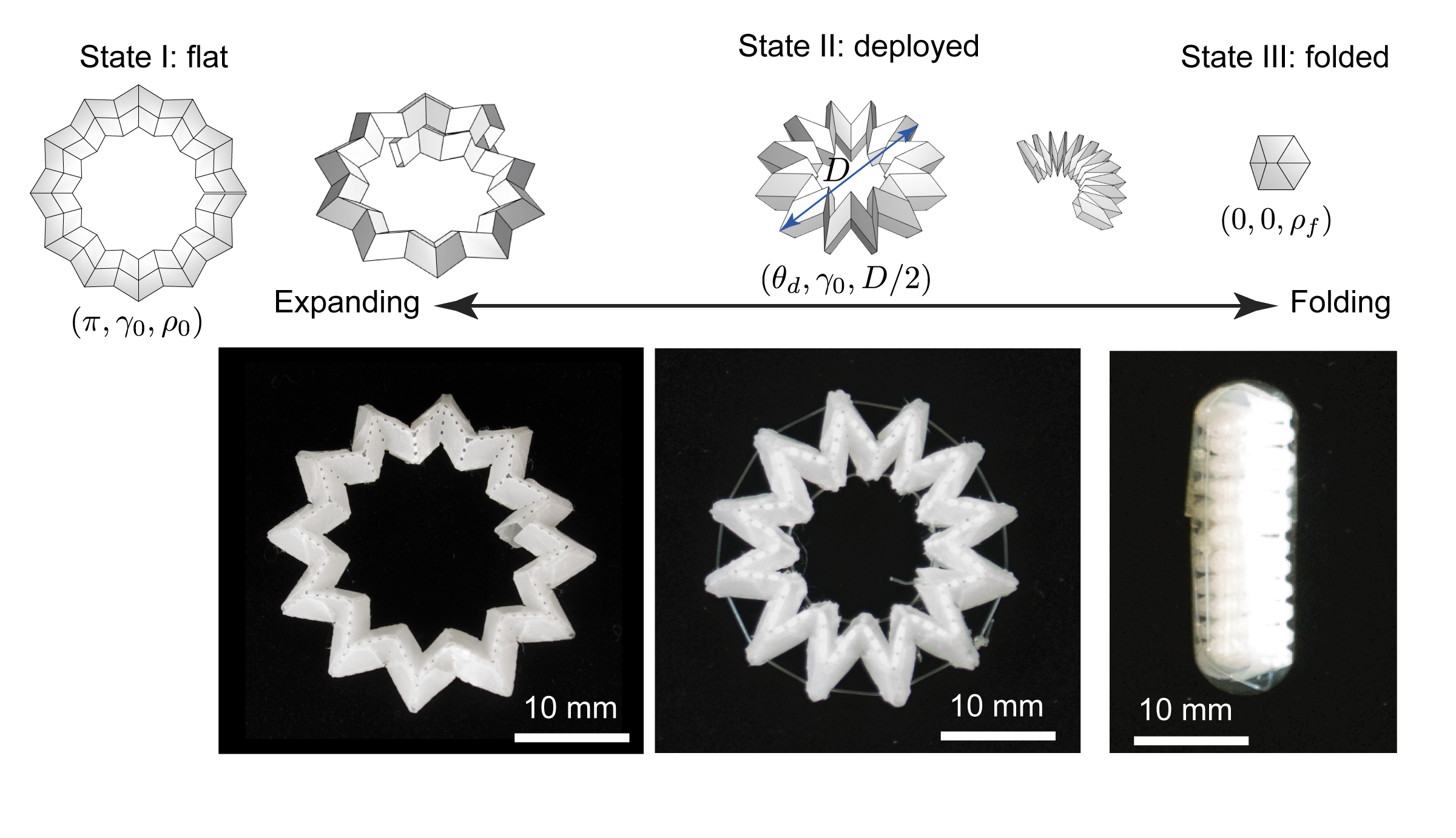
What made this project really fun (and challenging) was the optimization part. The device behavior wasn't coming from complicated mechanisms, but from geometry itself. We had to carefully tune parameters like the angles of the folds, the size of each unit cell, and the thickness of the material so that the structure could both fit inside a capsule and reliably expand to the right size. There's a surprisingly rich design space here — small changes in geometry can completely change whether the device deploys properly or fails. In the end, it felt less like designing a device and more like solving a geometric puzzle, where mechanics, materials, and constraints all come together in a pretty elegant way.